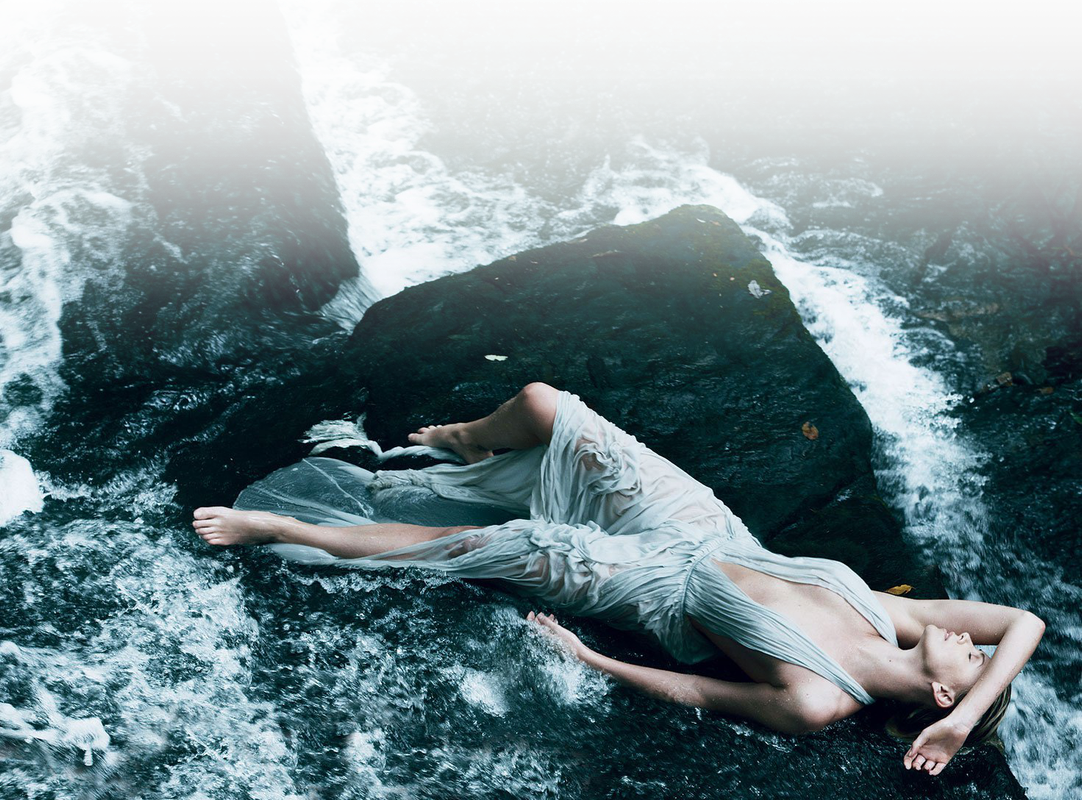

we are slaves to the sirens of the salty sea
The second question, although it is not quite that, is even more difficult for her to understand than the first. There is a moment of confusion, crossing across her delicate features like a storm cloud and then lingering, furrowing her brow, darkening the silver of her eyes. She sinks into the depths of the word, into the very meat of it, trying to burrow under the surface as though she would be able to find meaning there.
Love.
Her father had gifted her so many different things as a child. Given her this love of the water and a body that does not quite shift to become it but has adapted to it well enough. He gave her the knowledge of the world and a maturity enough to rise and meet it. He gave her freedom and independence.
But he did not give her love.
In truth, he barely gave her an understanding of it, perhaps because he had felt it so little.
“I do not love him,” she finally says, after minutes had passed in quiet contemplation. Her face remains trapped in her confusion, but she shifts her gaze back to his, searching his face. “He was…” she tries to search for the word, “Ivar.” A roll of her shoulder. They had understood one another from the very beginning—even as the kelpie had done his best to try and figure exactly who, and what, she was.
“He kept me on the island and, in return, I gave him children.”
It was the only way she could try to explain the arrangement. That it was part home and, at times, felt like part prison, even though there was part of her that knew she could step into the water and slip away. That having the kelpie’s children was both wanted and not, both burden and gift, and at times neither.
“Is that not common?” she asks, a sudden uncertainty seizing her.