
10-29-2025, 10:05 PM
frey—
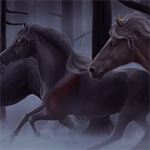
There is only silence, only sound. There is all too much and all too little. An existence of nothing while everything happens loudly, surprisingly, shockingly around her. How there can be so much existing while she has little to support her escapes her. What is the little mare to do? Stumble upon the joys of another?
And what of that simplicity? What of the sweetness, the delight, the sheer decadence of knowing life is small and short and what you make of it?
Frey is neither simple, nor short in breath. She does not know of how to make a life, how to find joy in those veins of a leaf or the chittering of bird or the laughter of a fox. She is a snake in the grass, not venomous but ominous—constantly on guard but never threatened, merely existing within what might happen and not what is actually happening around her.
What happens around her is beautiful: lost and careless, dangerous and delicious and entirely without reason. Such is nature. The tides and the waves, the foam on the crest of the sea and the rustle of trees in the breeze. Frey knows not of those easy flutterings, the collapsing and rising of a butterfly’s wings. She is all tight muscle and red scale . . . hot, harmless, seeking. The grass snake of her imagination slithers and writhes, desperate for the tight coil of a viny plant or the poison of a deadly flower.
The play of the druid and her fox is at its tail-end when the snake finds them. Frey watches, pupils dilating to fascinated slits. There is no anger, no elation—not even the racing of a heart as she sees the last moves of their dance.
But she is madly curious.
Too muted by the sadness, the neglect.
“You must have seen so much, to know life in the way that you do,” she says as she makes her approach obvious.
Frey feels a desperation suddenly, to know that life between them—but mostly she feels embarrassment. Her chin draws close to her chest, tucking her vulnerability tight into herself before closing her eyes.
“I mean—“ broken, perhaps lost, “I think you must love that fox.”
And what of that simplicity? What of the sweetness, the delight, the sheer decadence of knowing life is small and short and what you make of it?
Frey is neither simple, nor short in breath. She does not know of how to make a life, how to find joy in those veins of a leaf or the chittering of bird or the laughter of a fox. She is a snake in the grass, not venomous but ominous—constantly on guard but never threatened, merely existing within what might happen and not what is actually happening around her.
What happens around her is beautiful: lost and careless, dangerous and delicious and entirely without reason. Such is nature. The tides and the waves, the foam on the crest of the sea and the rustle of trees in the breeze. Frey knows not of those easy flutterings, the collapsing and rising of a butterfly’s wings. She is all tight muscle and red scale . . . hot, harmless, seeking. The grass snake of her imagination slithers and writhes, desperate for the tight coil of a viny plant or the poison of a deadly flower.
The play of the druid and her fox is at its tail-end when the snake finds them. Frey watches, pupils dilating to fascinated slits. There is no anger, no elation—not even the racing of a heart as she sees the last moves of their dance.
But she is madly curious.
Too muted by the sadness, the neglect.
“You must have seen so much, to know life in the way that you do,” she says as she makes her approach obvious.
Frey feels a desperation suddenly, to know that life between them—but mostly she feels embarrassment. Her chin draws close to her chest, tucking her vulnerability tight into herself before closing her eyes.
“I mean—“ broken, perhaps lost, “I think you must love that fox.”

@Aeife