
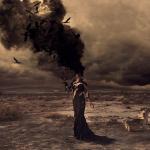
violence
She views the world not in politics, but in things to be taken – she views them as wells from which she can draw forth amusement. Of course, her enjoyment often comes at their cost, for she is entertained by fear and submission, by their eyes growing wide and the acrid stench of fear emanating from their bodies.
She has no kingdom allegiance, but if asked, she would call herself a queen. Queen of bones, ruling court over a whole host of them, jesters and plebeians who dance for her amusement, who obey her every whim, for she is their creator as well as they queen.
(It’s almost like they’re alive. Almost.)
The slow and deliberate way the shadow-thing speaks reminds her of her family, though she doesn’t look much like them. She thinks about trying one of their strange trills, to see if the shadow – Anastasia – speaks that language, but Violence is not fluent in that tongue, her lips too soft, so she does not try.
Her grin widens when the shadows obey the girl, form a mimicry of the bones at her side. It’s something she’s seen her mother do – draw forth shadows into shapes – and she wonders for one delirious moment if this girl is some long lost sister, another mixture of monster and magician.
“I’m Violence,” she says. She loves her name and its implications – that she was born for cruelty, mayhem.
“Were you born like this?” she asks, curious, perhaps still idly wondering if there is some connection between them. She thinks about trying to slip into the girl’s mind, to delve for her own information there, but she doesn’t yet know if the girl is as stupid as Charnel is, as open. So she waits, patient, watching the shadows and the bones pace and circle one another.
I’d stay the hand of god, but war is on your lips
